
Plaud Is Great. But It Solves Yesterday’s Problem.

by Joseph Murphy

The quick take
All AI note-takers tend to fall into two camps. Some excel at capturing the conversations you – the meetings and calls you choose to record. Others lean into ambient memory: catching everything happening in your life, surfacing fleeting ideas, and reminding you of details you'd otherwise forget. The latter feels less like a recorder and more like a memory assistant.
Your Brain Wasn't Built to Multitask Meetings
I'm sure most people can relate: when you're in a meeting, you're effectively doing two jobs at once. Part of your attention is focused on listening, understanding, and contributing to the conversation, while the other part is busy trying to capture every important detail in your notes.

Inevitably, something gets lost along the way – you either miss the opportunity to ask a great question or fail to record a key insight you'll need later.
That's where AI note-taking assistants come in. These devices can record conversations, transcribe them automatically, and organize everything into a searchable knowledge base. Beyond simple transcription, they can summarize discussions, identify key takeaways, generate action items, and surface important information whenever you need it.
From Nine Contenders to Two
I tested every AI note-taker I could get my hands on – Plaud, Pocket AI, Limitless, Bee, Omi, Fieldy, and more.
They all fall into two camps: the ones built for conversations you already know matter, and the ones that work like an ambient memory – quietly catching everything, including the moments you only realize were important later.
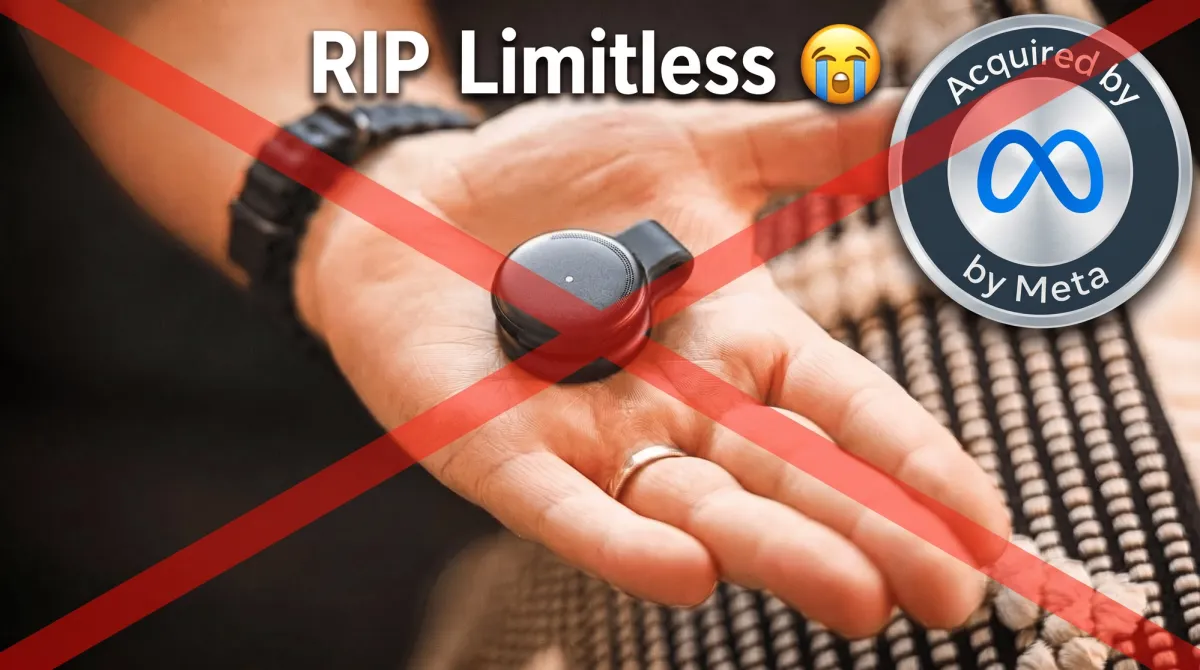
But most didn't make the cut. Pocket AI is just a weaker Plaud. Bee, Omi, and Limitless are either acquired, discontinued, or simply less reliable. So it came down to the best of each camp: Plaud vs Fieldy.
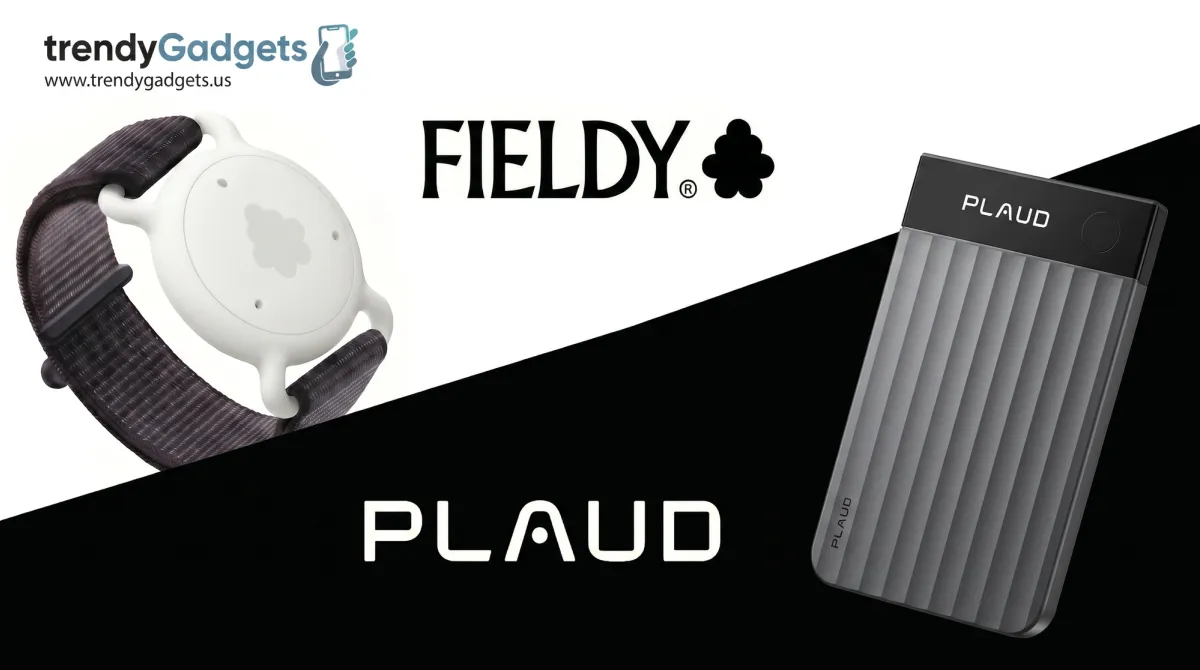
Both Plaud and Fieldy are AI-powered devices that record conversations, transcribe them, summarize them, and help you find information later. But after using them, I realized they are not really trying to be the same product.
Plaud is built like a smarter meeting recorder. Fieldy is built more like an ambient memory assistant. And that difference matters more than it first seems.
Plaud: A Better Way to Record Important Moments
Plaud is designed around intentional recording. You decide something is worth capturing, press a button, and record it. That makes a lot of sense for formal meetings, interviews, client calls, lectures – situations where you already know the conversation matters.
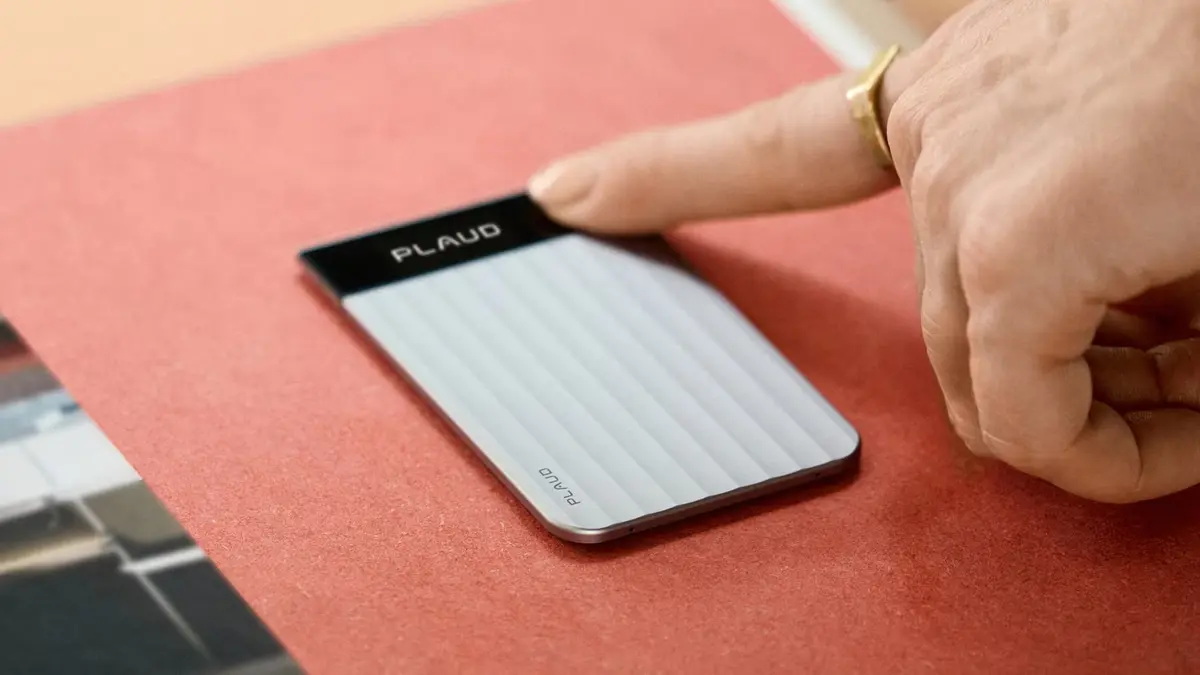
In that context, Plaud is very good. It feels polished, focused, and professional, and its ecosystem is clearly built around structured documentation, with a large library of templates for turning conversations into specific outputs. Some models include multiple microphones, and newer versions like the Plaud Note Pro have been reported to improve pickup range and meeting capture.
So if your main goal is simple – “I want a good device for recording meetings” – Plaud is easy to understand. It is a focused tool for a focused job. But that is also where its limitation begins.
Plaud works best when you already know something is important enough to record. A lot of the best ideas, reminders, and insights happen unexpectedly – and you do not always know in advance that a conversation will matter.
Fieldy: Built for the Moments You Did Not Plan to Save
Fieldy takes a different approach. Instead of acting like a recorder you turn on for specific moments, it is built around the idea of ambient memory. Its purpose is not just to document meetings – it is to help you remember more of your day.
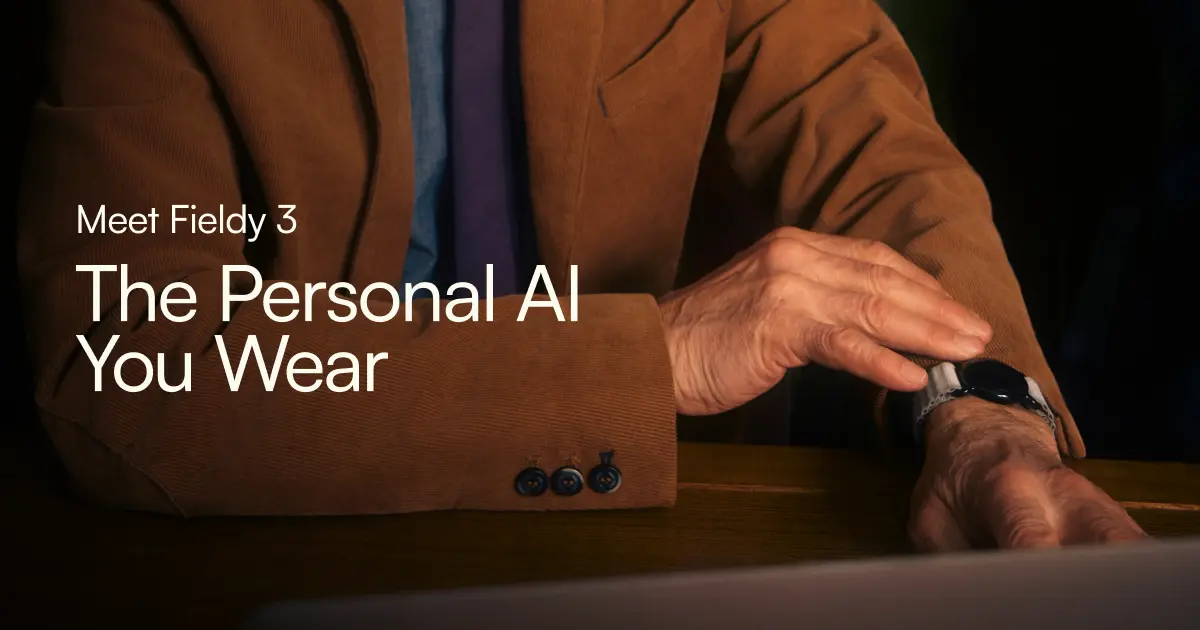
That makes it useful across a far wider range of situations: spontaneous conversations, networking events, quick ideas, brainstorming sessions, personal reminders, and the random moments that only become important later.
It does not only help with the conversations you already know are important. It helps with the ones you only realize were important afterward.
If Plaud is for intentional documentation, Fieldy is for memory augmentation. It feels less like a tool you have to operate and more like something that quietly supports you in the background. With Plaud, the habit is: “Should I record this?” With Fieldy, the experience is closer to: “Good thing this was captured.” And for an AI wearable, that feels much closer to the promise of the category.
Fieldy
Plaud
The Workflow Difference Matters More Than the Specs
On paper, it is easy to compare these devices by microphones, battery life, templates, and transcription accuracy. Those things matter, but they do not tell the whole story. The bigger question is: how much effort does the product require from you?
In my experience, Plaud felt more manual. It is still a good product, but the workflow made me feel like I had to manage it – think about recording, syncing, and waiting for the information to become useful. An AI assistant should reduce mental overhead, not become another thing you need to remember to check or process.
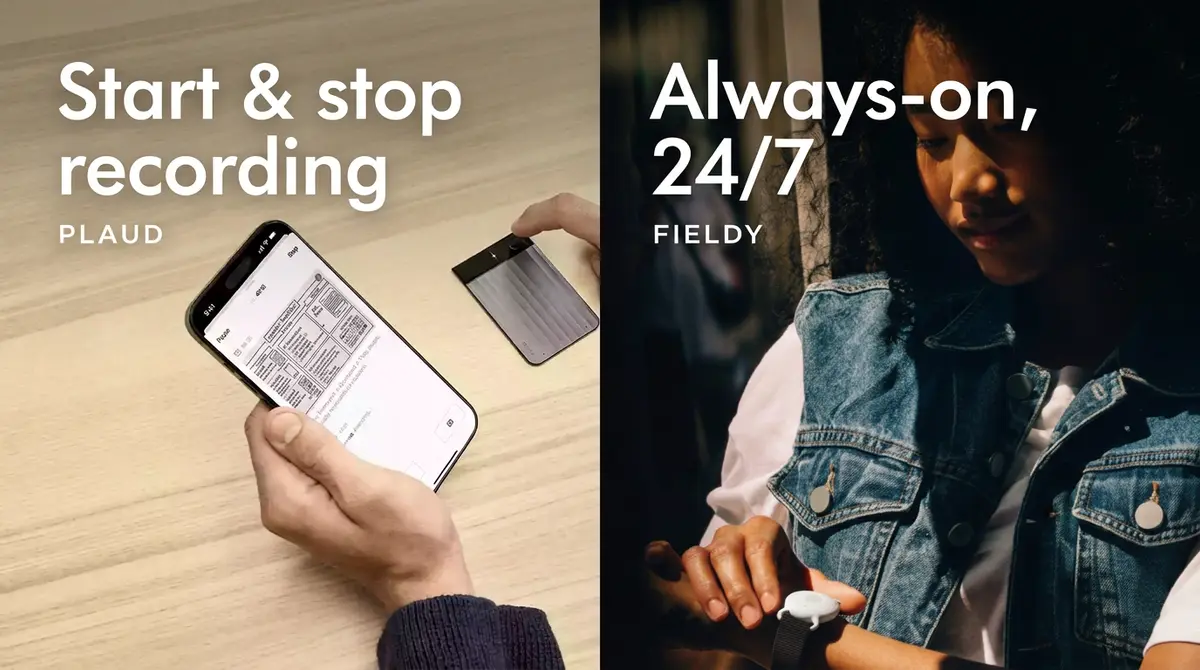
Fieldy felt more seamless because it better matched the idea of an always-available assistant. The value is not only in the final transcript or summary – it is that the device feels naturally present throughout the day. The winning product in this category will not necessarily have the most templates or the most polished summaries. It will be the one that fits into your life with the least friction. Because the less you have to think about it, the more useful it becomes.
Where Plaud Still Wins
To be fair, Plaud has real strengths. Its meeting-focused experience feels more mature, its use case is very clear, and its template ecosystem is more developed – useful for people who want specific outputs from sales calls, interviews, or professional conversations. In my testing, Plaud's transcription accuracy was also slightly better in some cases. Not dramatically, but enough to notice occasionally.
So Plaud is not a bad choice. It is probably the better option for someone who wants a dedicated meeting documentation tool and does not care much about capturing anything outside that context. But that is exactly why I find Fieldy more interesting. Plaud is optimized for meetings; Fieldy is useful beyond them.
Why Fieldy Feels More Future-Proof
Another major advantage for Fieldy is its public API. This might not matter to everyone, but it matters a lot for power users, developers, and anyone who wants their AI notes to connect with the rest of their workflow. Fieldy's API gives developers REST access to conversations, transcripts, tasks, and speakers, making it possible to build custom integrations and use Fieldy data outside the default app.
That makes Fieldy feel less like a closed gadget and more like a platform. And that is important, because AI note-taking is still a young category – the best workflows probably have not been invented yet. Maybe you want conversations to flow into your CRM, reminders into your task manager, or notes into a personal knowledge base. A public API makes those things realistic. Plaud may feel more polished today, but Fieldy feels more flexible and expandable – and in a fast-moving AI category, flexibility matters.
The Main Difference in One Sentence
The simplest way to explain the difference is this:
Plaud is for conversations you know are important. Fieldy is for conversations you only realize were important later.
If you already know you need to record a meeting, Plaud does the job well. But if you want something that helps you capture more of your life without constantly deciding what deserves to be saved, Fieldy is the more compelling product. It changes the value proposition from “better notes” to “better memory.” And that is a much bigger idea.
Final Verdict
Our pick
Fieldy – it changes the promise from “better notes” to “better memory.”
After using both, I would choose Fieldy. Plaud is a strong product: if your main use case is formal meetings, interviews, or professional documentation, it makes a lot of sense – polished, focused, and built around a clear workflow. But Fieldy is more useful in everyday life. It is not limited to the moments you remember to record; it helps during meetings, but also during spontaneous conversations, brainstorms, networking, and all the small interactions that are easy to forget but often matter later.
Plaud helps you document important conversations. Fieldy helps you stop losing them in the first place. And for this category, that feels like the more powerful promise.
Joseph Murphy
Technology journalist covering AI, cybersecurity, and the impact of Big Tech on global markets. Known for turning complex innovations into clear, accessible reporting.
Comments (0)
Leave a Comment
Your email address will not be published. Comments are reviewed before they appear. Required fields are marked *